New programme to educate youth about Rwanda’s history, values, cultural heritage

Recognising the vital role of youth in shaping Rwanda’s future, the Ministry of National Unity and Civic Engagement launched “Rubyiruko menya amateka yawe (Youth, know your history),” a programme that educates young people about the country’s history, values, and cultural heritage while equipping them with the knowledge necessary to protect and develop their country.
As part of this programme, an event was held on Friday, February 7, at University of Rwanda’s Nyagatare campus, bringing together over 1,000 students from the university, and high school students and youth representatives from Eastern Province, apart from Bugesera District which will participate in another session in Kigali.
The event kicked off with entertaining performances including music, modern and contemporary dance, fire-spitting, and acrobatics, showcasing students' talents and energising the crowd.
Addressing the youth, Eastern Province Governor Pudence Rubingisa emphasised the importance of the programme and the province’s willingness to follow up and ensure that it successfully achieves its goals.
“The specialty for us is that this year, 2025, is a year to work hard and accelerate development. That is also a requirement to show our love for the country and loving your country means working for it, and you can’t work for it without loving it,” he added.
He commended the youth for attending and learning from elders, promising to maintain engagement with youth leadership at all levels, including the village level, to ensure lessons from the programme are put into action.
Dr Jean Damascène Bizimana, the Minister of National Unity and Civic Engagement, delivered an engaging lecture on Rwanda’s history, covering pre-colonial, colonial, and post-independence periods.
He explained that before colonisation, Rwandan kings ruled over all people equally, regardless of social class.
Dr Bizimana provided a historical overview of how colonial rule destroyed Rwanda’s unity.
“Every king pledged to be the leader of all Rwandans, symbolised by adopting a royal name that signified his duty to the entire nation,” he said.
However, after colonisation, foreign rulers introduced ethnic divisions, officially classifying Rwandans as Hutu, Tutsi, and Twa in 1932—a system that fuelled decades of discrimination and violence, Dr Bizimana explained.
He stressed the importance of understanding history, as it provides lessons for shaping the present and the future.
“It is essential for us to discuss the journey our country went through to be where it is today. This journey is the foundation, especially for you, the youth, to build a stronger nation and sustain our progress,” he said.
“Rwandans say, ‘when you do not know where you come from, you can’t know where you are heading,’ this means, Rwandans knew how to think about what was necessary. This legacy means that to be able to know what you should be doing in the future, and what you need to do and protect in the present; it is critical to know the past and the history.”
Dr Bizimana explained that learning from history helps maintain positive achievements while analysing and eliminating past mistakes that led to destruction.
The minister shed light on the tragic events that unfolded between 1959 and 1994, driven by divisive politics that fuelled ethnic hatred, discrimination, and mass killings.
“We must then know what caused that, and what made the last 60 years horrible to the extent of killing more than one million people,” he added, referring to the 1994 Genocide against the Tutsi in Rwanda.
“Those 60 years left us with wounds. We are lucky that Inkotanyi stopped the politics that killed Rwandans and taught others to be killers, which is a horrific tragedy. So, the effects are there and the youth are the ones that mostly need to deal with it because you make up the majority of our population.”
Dr Bizimana encouraged young people to learn from Rwanda’s history to sustain the progress achieved over the last 30 years, which is the foundation of “Rubyiruko menya amateka yawe” programme.
Fighting genocide denial, social media misinformation
Dr Bizimana warned the youth about the growing threat of genocide denial and revisionism, especially on social media.
“You will encounter people—friends, family members, or even strangers—you mentioned the benefits of social media which is good, but there are those in the diaspora who participated or have relatives who were involved in that bad history and they deliberately distort or deny it to hide their own or their relatives’ involvement in past crimes,” he warned.
“It is necessary that you, young people, learn and know the true history so that you can continue building the country by knowing where it came from and without being lied to or manipulated by those who deliberately destroying and misrepresenting our history.”
He urged the youth to use social media to defend the truth and protect Rwanda’s achievements.
The event allowed young participants to ask questions, discuss ideas, and express their views.
Emely Byukusenge, one of the youths, stressed the importance of using social media responsibly to promote patriotism and national unity.
“Now the youth have a platform to speak especially on social media. We should all show that we love our country. We all use digital platforms and we have highspeed internet,” he noted.
“Therefore, we should protect it. Some people use social media to break our country. They can’t do it with their own hands, but they use social media spaces to speak. Fellow youths, let us protect what has been achieved and challenge those people by telling the truth because we are in the country and they are abroad and they do not know anything.”
When asked about his vision for Rwanda’s youth over the next 50 years, Dr Bizimana expressed confidence in their potential.
“The youth of Rwanda, not just in 50 years but even today, give us great hope,” he said.
“What we are doing is to give you a beautiful country for you to live in, build, protect, and develop yourselves. Stay positive, there is a lot of hope. Do not let drugs ruin you. And if you see anyone heading that way, please help them.”
Dr Bizimana encouraged young people to acknowledge the wounds of Rwanda’s past while ensuring they do not become prisoners of that history.
“If you take, for example, a parent who was born from a Genocide survivor, one whose kids were killed, those who were born in exile, or those who have parents who committed Genocide; all those have wounds they have left to the youth. But do not be a prisoner of those wounds,” he noted.
“We want youth who are not trapped in the wounds of the past. That is why we have platforms for healing and discussion. Approach them so that you do not get stuck in history.”
Dr Bizimana urged the youth to reject all forms of divisionism and discrimination, instead embracing unity and reconciliation, moving past the historical wounds, and sharing national identity through Rwandan core values.

Amadini ahishira abakoze Jenoside yaburiwe, ADEPR ishimirwa kwambura ubushumba abayigizemo uruhare
Minisitiri Dr Bizimana Jean Damascène yanenze amadini n’amatorero ahishira abagize uruhare muri Jenoside yakorewe Abatutsi mu 1994, ashimira Itorero…

Over 500 Genocide Convicts Begin Reintegration Training Ahead of Release
A total of 526 inmates convicted of crimes related to the 1994 Genocide against the Tutsi have begun a reintegration training programme to prepare…

Minister Bizimana urges ADEPR pastors to promote unity and resilience
The Minister of National Unity and Civic Engagement, Dr Jean-Damascène Bizimana, has urged senior pastors of the ADEPR Church to uphold leadership…
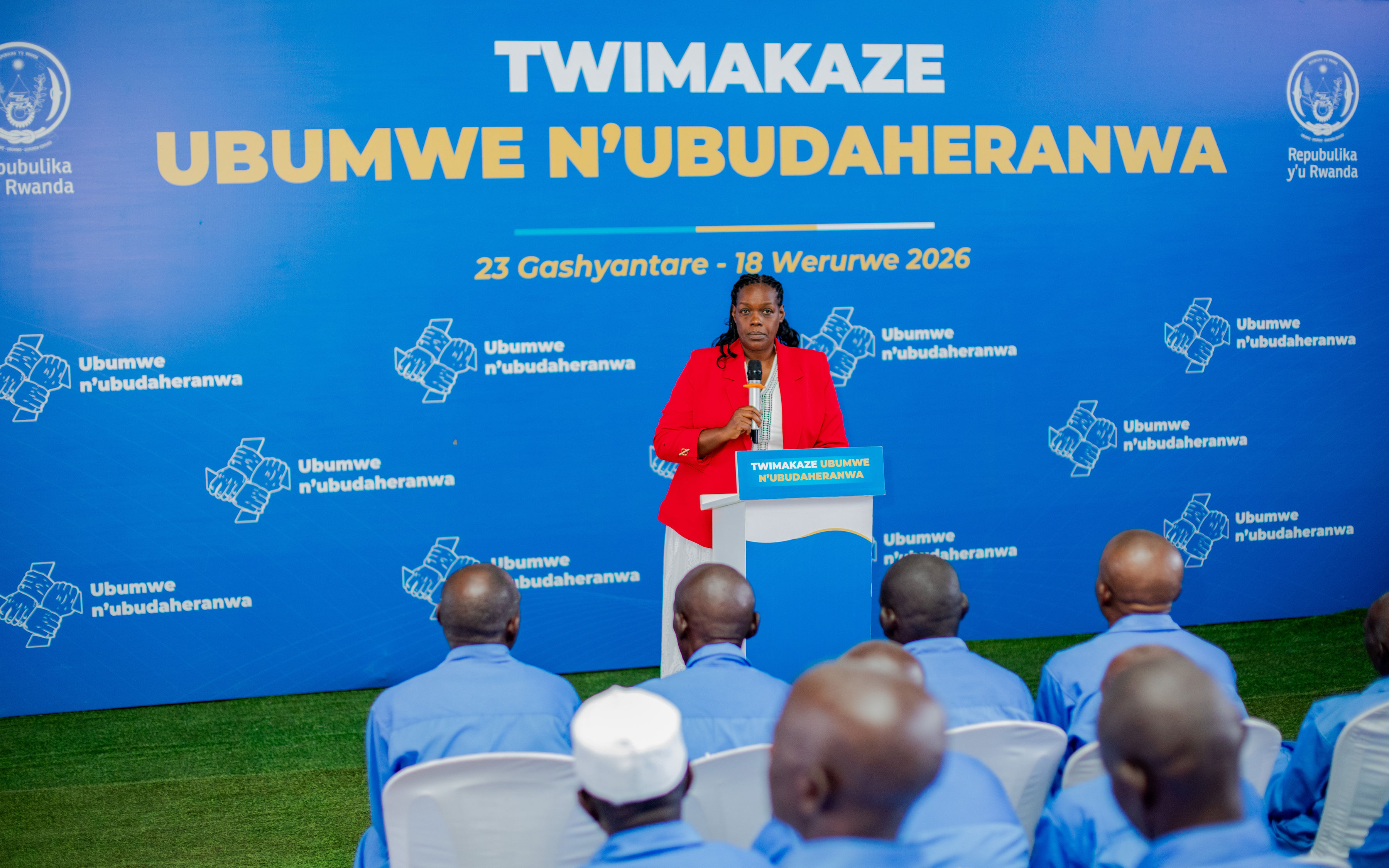
Over 260 genocide convicts complete unity and resilience training ahead of reintegration
A total of 266 inmates convicted of crimes related to the 1994 Genocide against the Tutsi, including 101 women, have successfully completed a unity…
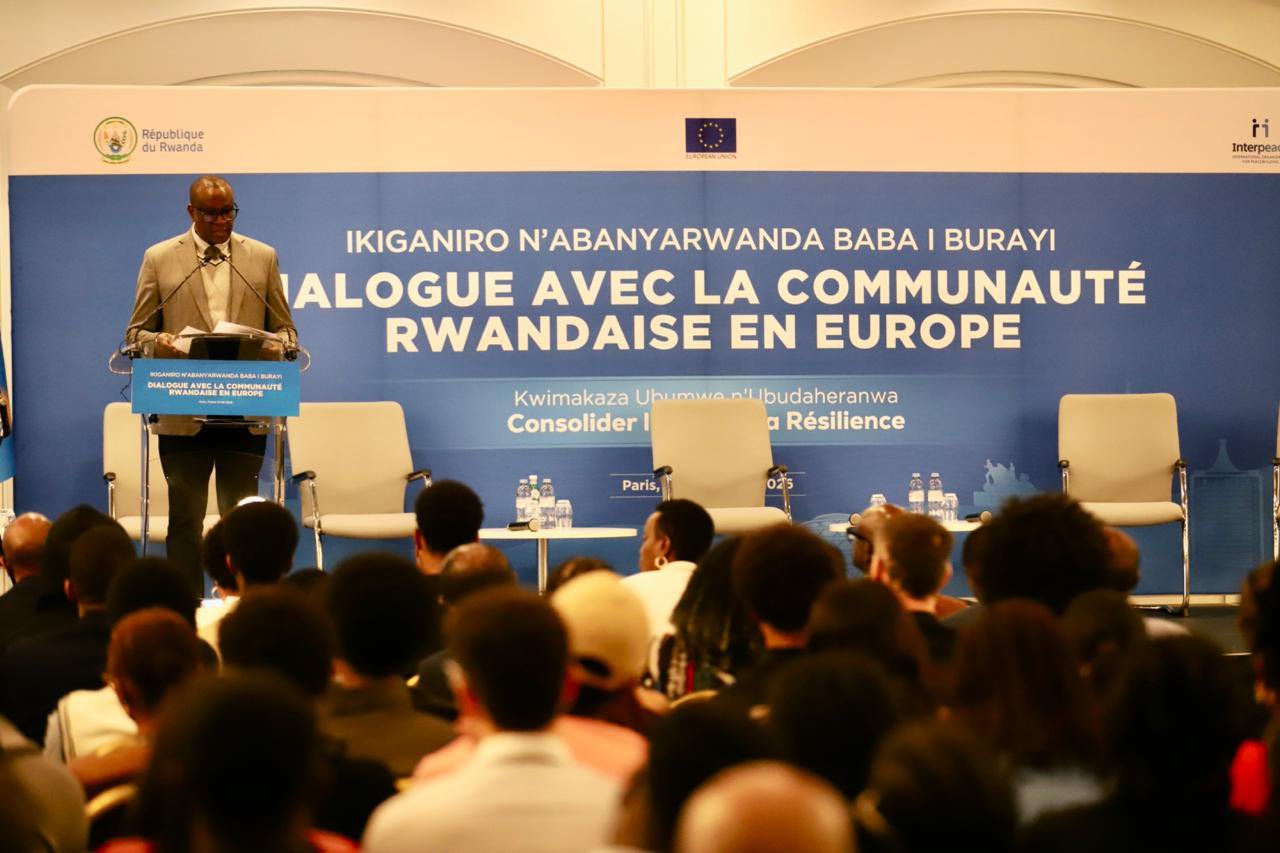
“Genocide Guilt Is Personal, Not Inherited” - Rwandan Diaspora in Europe Engaged in Dialogue on Unity and Resilience
On 21 February 2026, the Ministry of National Unity and Civic Engagement (MINUBUMWE) convened an unprecedented dialogue with Rwandans living in…
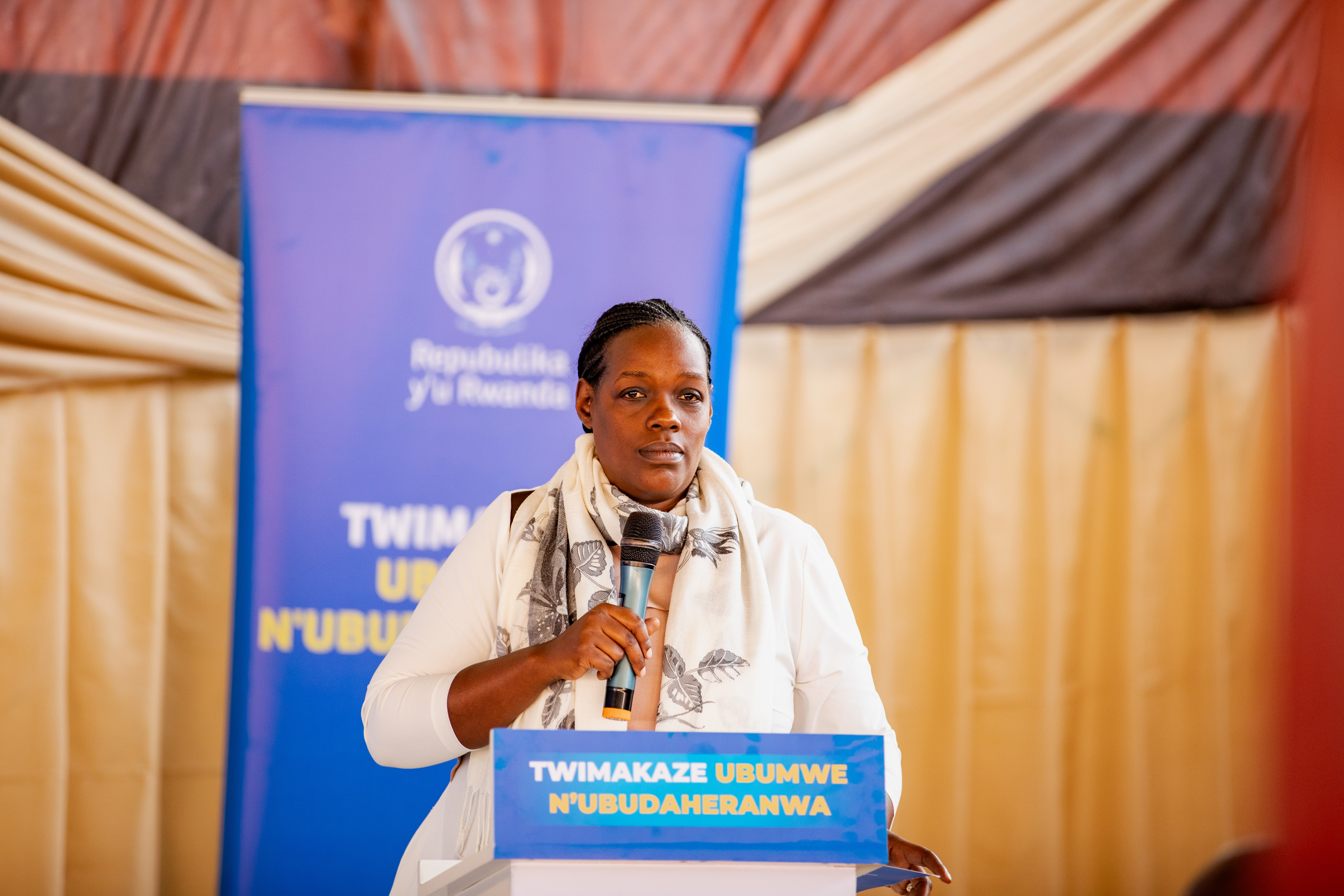
Genocide convicts urged to shun divisionism, embrace gender equality ahead of release
A total of 262 convicts of the 1994 Genocide against the Tutsi who are nearing completion of their sentences are undergoing a reintegration training…
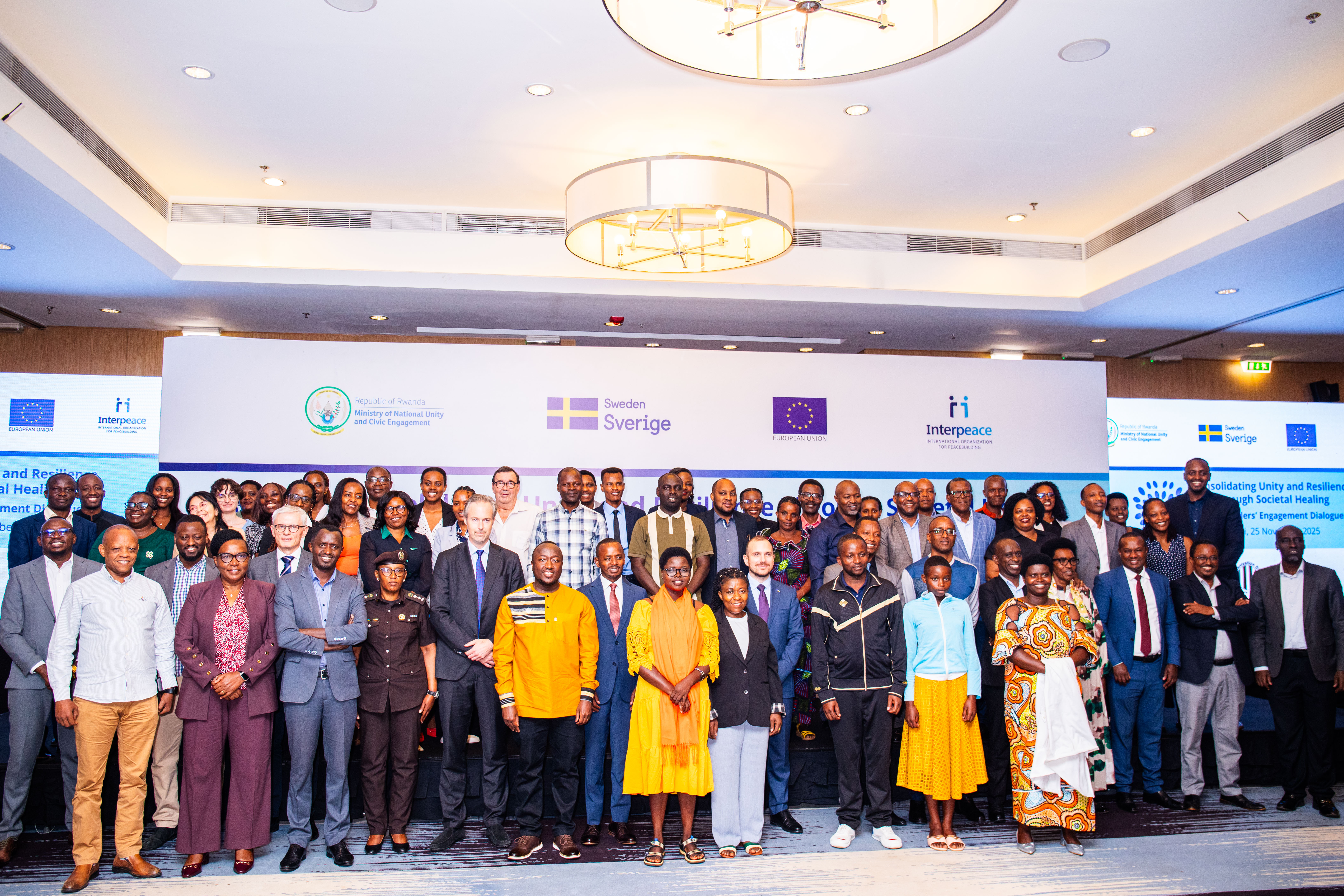
Reflecting on achievements of the “Reinforcing Community Capacity for Social Cohesion and Reconciliation through Societal Healing” program
On 25 November 2025, Permanent Secretary Eric Mahoro joined stakeholders to reflect on the results of the “Reinforcing Community Capacity for Social…
Bigogwe yabaye indiri y’itegurwa rya Jenoside yakorewe Abatutsi – Min. Dr Bizimana
Ku wa 18 Gicurasi 2025, Minisitiri Dr Bizimana Jean Damascene yifatanyije n’abaturage b’Uturere twa Nyabihu na Rubavu mu Kwibuka ku nshuro ya 31…

Umugambi wa Jenoside yakorewe Abatutsi watangiye mu 1990 – Min. Dr Bizimana
Ku wa 17 Gicurasi 2025, Minisitiri Dr Bizimana Jean Damascene n’abandi bayobozi, bifatanyije n’abaturage b’Akarere ka Rulindo, mu gikorwa cyo Kwibuka…